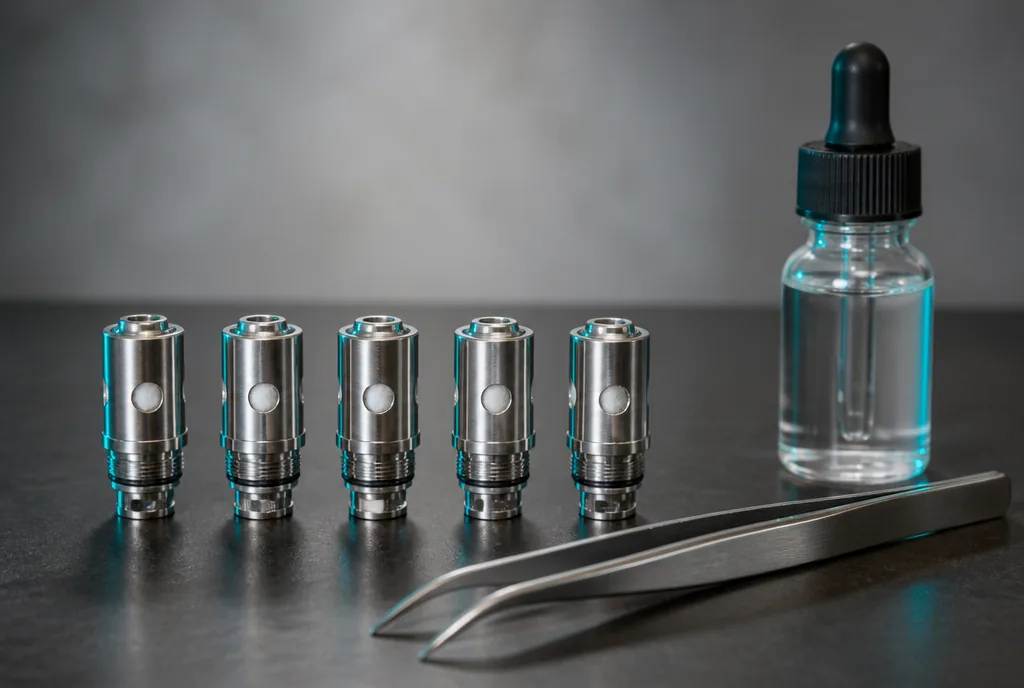
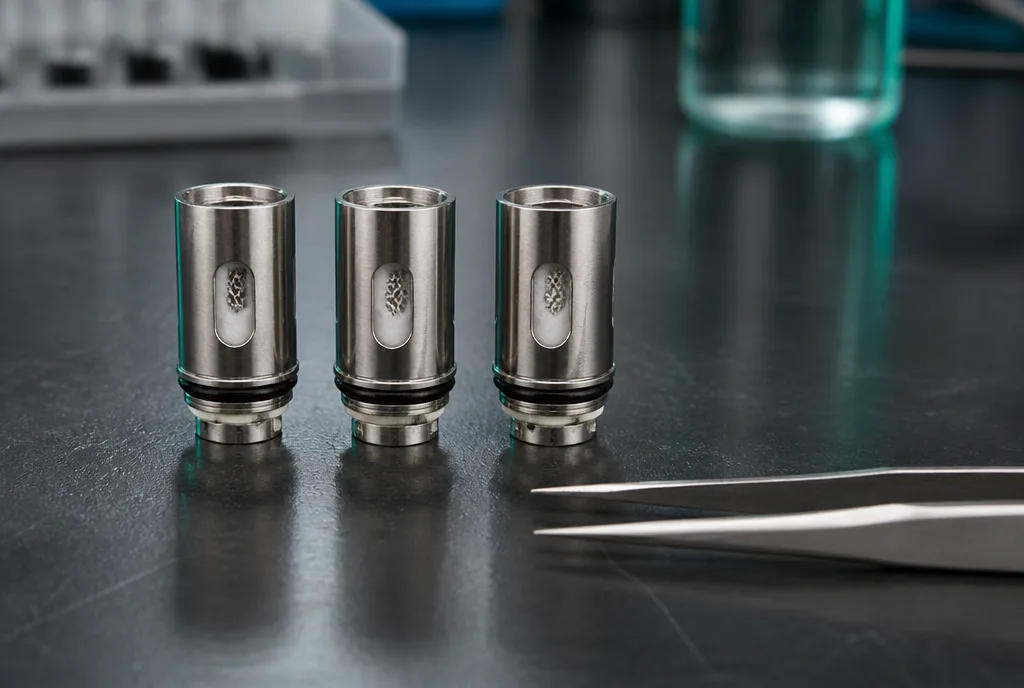
Geekvape coils: our bench test of the series
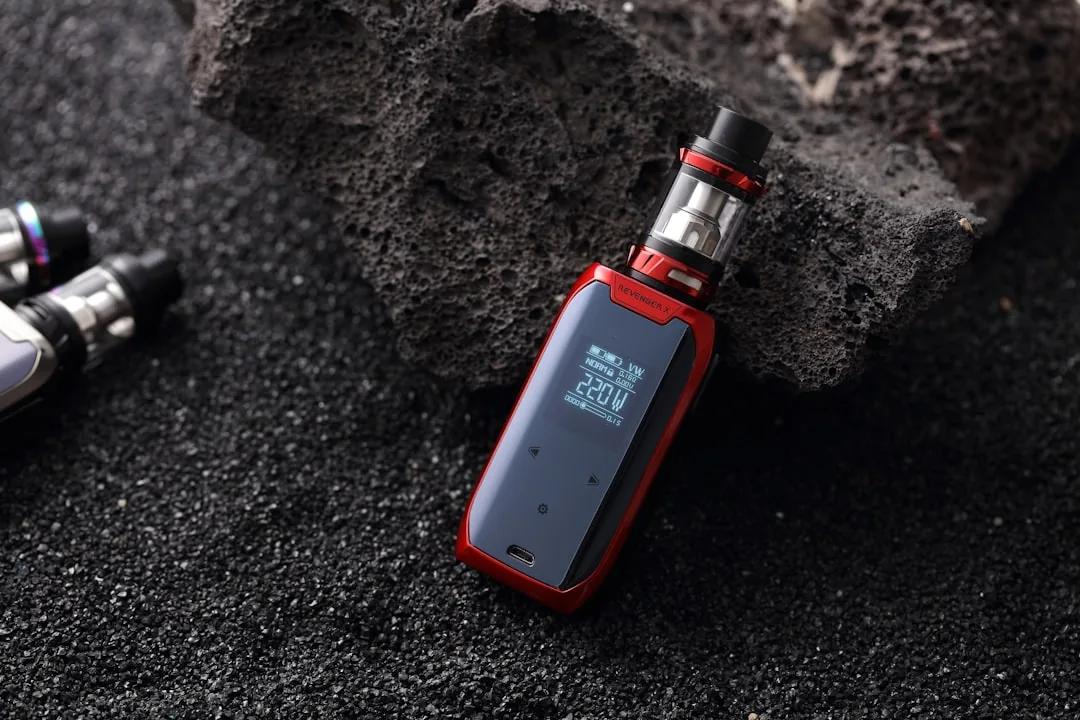
One name comes up again and again as soon as British listings start talking about replacement heads. Geekvape coils sit on the shelves of most specialist retailers here, and they have become an unofficial standard for a good part of the market. The trouble starts when you try to tell the references apart, because the series names look similar and the useful information is printed in very small type on the coil body itself. The lab put the main families on the bench to work out what actually separates them.
What defines Geekvape coils on the bench
The first thing you notice handling them is the fitting. B Series coils are push-fit, with no screw thread at all, so the head clicks into the tank base under simple pressure. That speeds up a change considerably and removes one of the classic sources of a leak, which is a head started at an angle in its thread.
The second characteristic is the spread covered by a single series. The B Series is described as running from MTL through RDL to DTL, which means one push-fit base serves three quite different draw styles. Change the head and you change how the device behaves, without changing the device.
That matters for the way the range has been organised more widely. Geekvape sells its heads in named series, and British listings most often name the B Series alongside the Z, M, S, P and Q families. Each of those is a separate world, and the lab treats them as such throughout this bench test.
Reading the wattage range printed on the coil
Every head carries a wattage range printed on its body. That marking is not decoration, and it is the only figure the lab will ever refer to when talking about power. We do not publish a recommended setting of our own, because the number that governs a head is the one its maker put on it.
The rule we apply on the bench is constant. Stay inside the printed range and start at its lower end, then work upwards only if the result feels thin. Below the range the wick struggles to keep up in the wrong direction, the vapour turns lukewarm and flavour flattens out. Above it, heating outruns the liquid arriving at the wick and the head ages quickly, with the harsh note that goes with it.
The same logic applies to the cell in your device. Whatever the head is printed with, the discharge current your battery can sustain is a question for the cell manufacturer’s own datasheet, not for an article. Our vape wattage chart by ohm sets those printed ranges in a wider context across resistance values, which is useful when you are moving between series.
What the bench actually measures
Because we refuse to publish figures we cannot stand behind, this bench test stays qualitative. What we compare is heating speed, evenness across the surface of the mesh, and how consistent flavour remains from a fresh fill to an exhausted one.
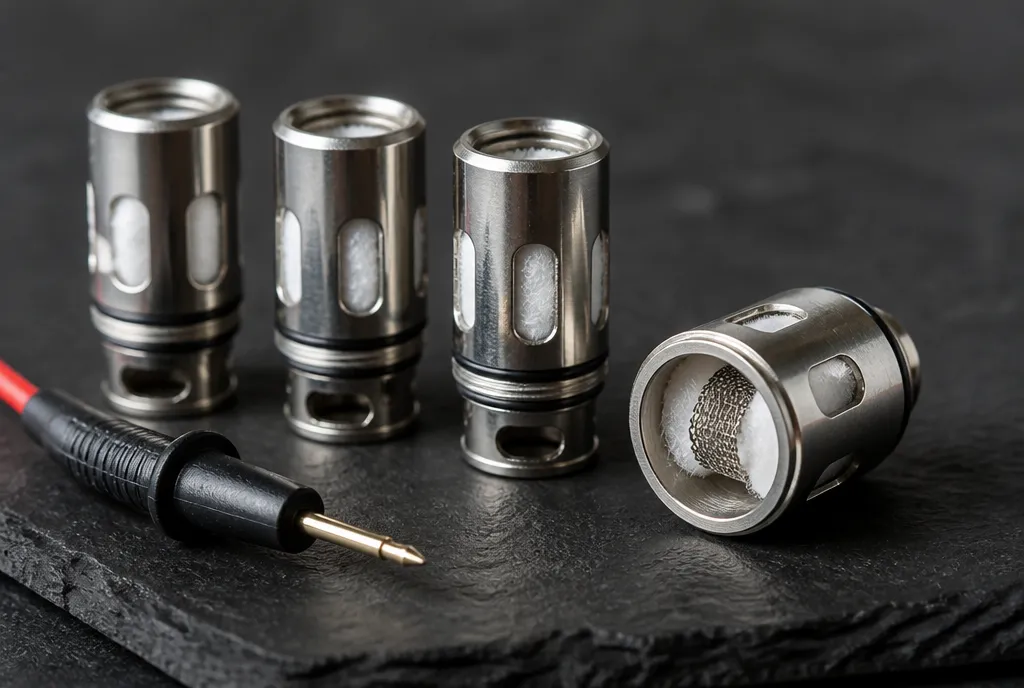
On those three counts the B Series behaves predictably. Mesh construction spreads heat rather than concentrating it in a few hot points, so the first draw arrives quickly and the flavour profile holds steady as long as the head is worked inside its printed range. Push it past that range and the evenness is the first thing to go.
Higher resistance heads within a series pull in the opposite direction. They lean towards a tighter, MTL style draw at modest power, they are quieter in use, and they last. Lower resistance heads in the same series give volume and a fuller DTL draw, at the cost of a shorter working life and a heavier appetite for liquid.
Compatibility, the real trap with Geekvape coils
The most common question the lab receives is not about performance at all. It is whether a given head will fit a given device, and this is where most wasted purchases happen.
Compatibility is decided by the series, not by the brand of the mod. A B Series head goes into hardware built for B Series heads, and British listings pair that series with devices including the Aegis Boost, the Boost Plus, the Aegis Hero and the Z Nano. A head from another series may look close enough to try, and it will still leak or fail to make contact.
The reliable method before reordering is to read the reference engraved on the head already in the device, or to check the series named on the tank or in its documentation. Judging by eye, on diameter alone, is how people end up with a drawer of heads that almost fit. If the vocabulary itself is the obstacle, our guide to vape coils explained works through the terms before you order.
Why the 2 ml cap changes the picture in the UK
British hardware is fixed small by law. Every tank and pod sold legally here is capped at 2 ml under the Tobacco and Related Products Regulations 2016, and nicotine e-liquid is capped at 20 mg/ml. Neither of those figures is a preference, and neither is going to change because of the head you fit.
That has two consequences on the bench. The first is that a series spanning MTL, RDL and DTL on one push-fit base is worth more here than it would be in a market with larger tanks. British vapers cannot buy their way out of a small tank, so the ability to change draw style by changing a head, on the device they already own, is the main adjustment available to them.
The second is arithmetic. A 2 ml ceiling means far more fill cycles to get through the same volume of liquid, and every fill cycle is an opportunity for the wick to be run dry or flooded. That is why coil life in the UK is commonly given as one to two weeks rather than a flat number of millilitres, and our piece on how long a vape coil lasts breaks down what shortens that window.
Priming carries more weight for the same reason. A head installed dry into a tank you will refill constantly is a head that starts its life already compromised, and our walkthrough on how to prime a vape coil covers the sequence the lab uses on every install.
Our overall reading from the bench
The lab does not come away from this with a ranking, because a ranking would be dishonest. These heads do not separate on a single score, they separate on how well they suit a use.
For a vaper who wants a coherent range that is easy to replace on a British high street, the B Series offers the best balance of availability, spread of draw styles and consistency of heating. For a tight MTL draw with endurance, the higher resistance heads within a series go the distance without heavy liquid consumption. For volume, the lower resistance heads deliver, provided you accept that they will need replacing sooner.
Frequently asked questions
How do I know which series to order?
Read the reference engraved on the head already fitted, or the series named on the tank or in its documentation. That reference, and not the look of the head, is what guarantees the replacement fits.
Do Geekvape coils work on another brand of mod?
Yes, provided the tank or pod is built for the series you are buying. The mod only supplies power. It is the tank that accepts the head, so check that the printed wattage range falls within what your device can deliver.
Why does a new head weep slightly when I fit it?
A little seepage on first fitting usually comes from excess liquid in the central well, or from a head clicked into place without being primed. Wet the wick, wipe the surplus away, seat the head firmly and only then fill.
Does a mesh head last longer?
Mesh heats more evenly, which limits hot spots, but working life depends far more on the liquid, the power used and general upkeep. A mesh head kept inside its printed range behaves well. The same head pushed past it does not.
Can I mix series in the same tank?
No. A tank is designed around one series. Fitting a head from another family, even one that seems to seat, leads to leaking, poor heating or no electrical contact at all.
What the bench test retains about Geekvape coils
The appeal of Geekvape coils rests on two things: a push-fit base that makes changes quick, and named series broad enough to cover MTL, RDL and DTL without swapping hardware. On a British setup fixed at 2 ml by regulation, that second point is worth more than it looks.
The bench confirms their consistency under one strict condition, which is respecting the series the tank was built for and the wattage range printed on the head itself. Choose on the reference rather than on appearance, prime properly, and expect the usual one to two weeks of service that the UK fill rate imposes. That discipline, more than any brand loyalty, is what the lab checks on every head it installs.
Editorial content for adult readers only. Not for sale to under-18s in the United Kingdom. Vaping products usually contain nicotine, a substance that causes addiction. This article is not a buying recommendation.