Vape wattage chart by ohm: how to read one properly
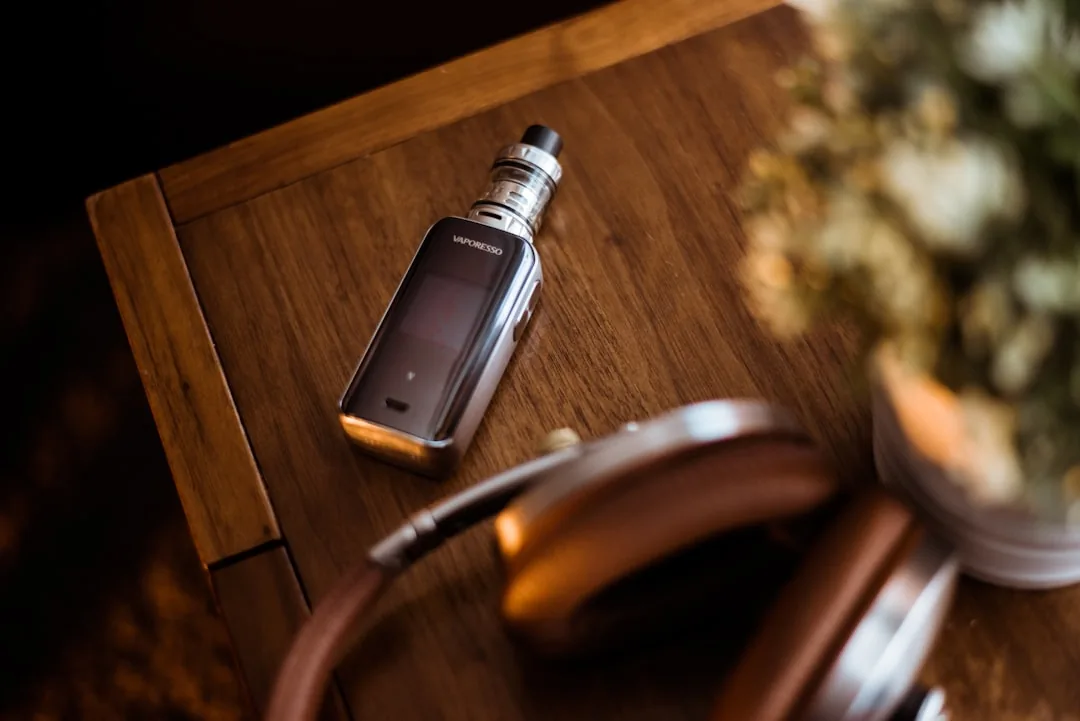
A device in watt mode, a coil whose label has rubbed off in a pocket, and the question arrives: what does this 0.6 ohm want? British guides answer it with a vape wattage chart, and the charts do agree on the broad picture. What they cannot do is replace the figure the manufacturer printed on the coil itself, because that figure is tied to a specific mesh geometry and a specific wicking path. This article sets out what a chart is genuinely useful for, where its authority stops, and why the 2 ml tank sold in the United Kingdom changes how the question should be approached at all.
What a vape wattage chart actually shows
A vape wattage chart is a summary of what the market prints on its own products. It gathers the bands that appear on coil boxes and on the coils themselves, and it lines them up against the draw style each band tends to be sold for.
That is a description of a catalogue, not an instruction. The lab does not set power figures for readers, and nothing below should be read as a value this site endorses for any device, tank or build.
Read that way, a chart is a navigation aid. It tells you roughly where a 0.8 ohm coil sits in the market compared to a 0.15 ohm one, which helps when you are choosing hardware rather than adjusting it.
Ohm value, draw style and what to look for
The four values a British vaper meets most often are 1.2, 0.8, 0.6 and 0.4 ohm, because those are the heads most pod and tank ranges stock. The table below maps them to draw style and to the thing worth checking on the packaging. Every row is indicative only.
| Coil value (ohm) | Draw style usually associated | What to look for before fitting |
|---|---|---|
| 1.2 and above | MTL, tight | The printed range on the coil or box; higher nicotine strengths are the usual pairing at this end |
| 0.8 | MTL to loose MTL | Whether the pod airflow can actually be closed down enough |
| 0.6 | Loose MTL or RDL | Confirmation that the tank is rated for the head, not just that it fits |
| 0.4 | RDL to DTL | A wider airflow setting; airflow, not power, is what defines this band |
| 0.3 and below | DTL, sub ohm | The device output ceiling and the coil rating on the box, both stated by the maker |
| Rebuildable builds | Set by the build itself | The cell manufacturer’s own datasheet for continuous discharge current |
Nothing in that table is a setting. The column that matters is the third one, because it points you back at the printed information every time.
The printed range on the coil overrides any chart
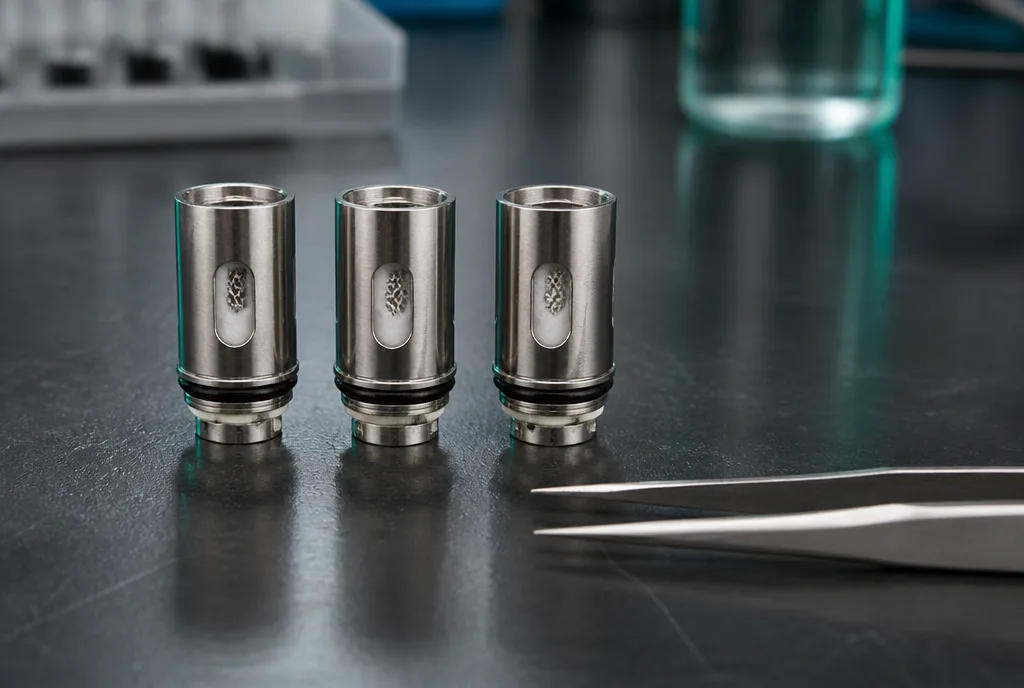
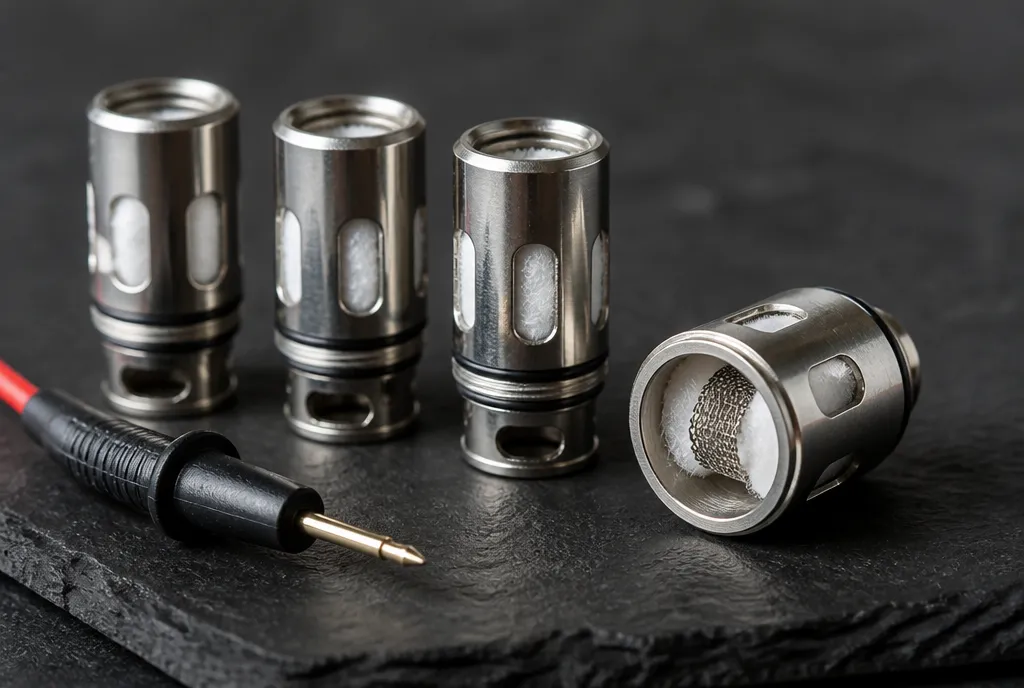
Two coils marked 0.4 ohm can be built very differently. A mesh strip and a wound wire of the same measured resistance spread heat across different surface areas, wick at different speeds, and are therefore sold with different printed ranges.
This is why the range on the coil wins. The manufacturer measured that exact head with that exact wick, which no general table can do. If the label has worn away, the coil box and the maker’s product page carry the same figure.
The same principle governs anything involving current. Questions about what a cell can deliver are settled by the cell manufacturer’s datasheet for that model, and by nothing else. No chart, forum table or calculator substitutes for it. Our guide to how vape coils are built and rated works through where those printed numbers come from.
The 2 ml ceiling changes the maths
Here the British context matters more than any table. Under the Tobacco and Related Products Regulations 2016, every tank and pod sold legally in the United Kingdom holds a maximum of 2 ml, and nicotine containing e-liquid is capped at 20 mg/ml.
Two millilitres is not much liquid. Run near the top of a band and that tank empties in a fraction of the time it would take at the bottom of it, which means far more refills, far more chances of drawing on a wick that has not caught up, and many more heat cycles through the same head.
That is the concrete reason British guides push starting low and working up rather than jumping straight to the top of a band. It is a hardware longevity argument, not a taste preference. Coil life in the United Kingdom is commonly quoted as one to two weeks, and how a tank is run is one of the variables behind that spread, as our piece on how long a vape coil lasts sets out.
The small tank also makes the top of a band less attractive than it looks on paper. Whatever a chart shows for a given ohm value, the practical ceiling in a 2 ml pod is often set by how often you are willing to refill it.
Watt mode, voltage mode and ohm’s law
Most devices sold today default to watt mode, where you set power directly and the device works out the rest. Voltage mode sets the potential across the coil instead, and the power that results depends on the resistance fitted.
Ohm’s law is what links them: power rises as voltage squared divided by resistance. The practical consequence is that a change of coil in voltage mode changes the delivered power even though you touched nothing on the device. That is the main reason watt mode became the default.
Understanding the relationship is useful. Using it to derive your own figure is not, because the printed range on the coil already accounts for the mesh and the wick in a way the equation cannot.
Using a vape wattage chart with rebuildables
On a rebuildable atomiser there is no printed range at all. The resistance appears on the device screen once the build is installed, and the wire gauge, material and number of wraps are chosen by the person building it.
A vape wattage chart is at its weakest here and should be treated purely as orientation, telling you which draw style a given resistance is typically associated with. Everything else belongs to the builder, who should be reading the cell manufacturer’s datasheet for the current their battery can supply and prime the wick fully before the first fire.
The same caution applies to high output tanks bought ready made. Our overview of sub ohm tanks, power and draw covers what changes once you move into that territory.
Recognising a setting that is off
Feel confirms what no table can. Vapour that arrives thin and lukewarm, with the flavour flattened, usually means the coil is being run below what it was designed for.
The opposite signal is sharper: a dry catch at the back of the throat, a burnt note, a puff that stings. That is the wick drying faster than liquid can reach it, and it is worth acting on immediately rather than pushing through, because a scorched wick does not recover.
Between those two edges sits a window that is personal to your liquid, your airflow and your draw. Finding it is a matter of small adjustments inside the range the maker printed, made one at a time.
Frequently asked questions
Why do two 0.6 ohm coils behave differently?
Because resistance alone does not describe a coil. Mesh area, wire material and wick channel all differ between models, which is why each one ships with its own printed range.
Does a thicker e-liquid change what the coil needs?
A high VG liquid moves through cotton more slowly than a thinner one, so it reaches the wick at a different rate. The printed range still applies, but the liquid is one reason the comfortable point within it moves.
Should I turn the power down as a coil ages?
Reducing power masks very little and does not restore a tired head. Once flavour has gone and the wick is darkened, replacement is the answer rather than adjustment.
Is voltage mode worth using at all?
It has its uses on older hardware and among people who like the control, but it demands that you rework the numbers every time the coil changes. Watt mode removes that step.
How do I know what current my battery can supply?
From the cell manufacturer’s published datasheet for that exact model, which states the continuous discharge current. Wraps, retailer listings and generic tables are not a source for this.
Getting the most from a vape wattage chart
Treat a vape wattage chart as a map of the market rather than a set of instructions. It tells you which draw style each ohm value is usually sold for, which is genuinely useful when you are choosing between coil heads or working out what a new tank is built around.
Then put the chart down. The range printed on the coil is the figure that governs the device in your hand, and any question about what a cell can deliver goes to that cell manufacturer’s datasheet.
With a 2 ml tank and a wick that has to keep up, starting at the bottom of the printed range and moving in small steps is the approach that keeps a coil working for its full life. That is the one thing a vape wattage chart will never tell you, and the reason the lab treats every printed range as the final word.
Editorial content for adult readers only. Not for under-18s in the United Kingdom. Vaping products usually contain nicotine, a substance that causes addiction. This article is not a buying recommendation.